Latent vs Sensible Load Breakdown in High-Humidity Climates
Humid-climate HVAC fails when temperature-led sizing ignores moisture.

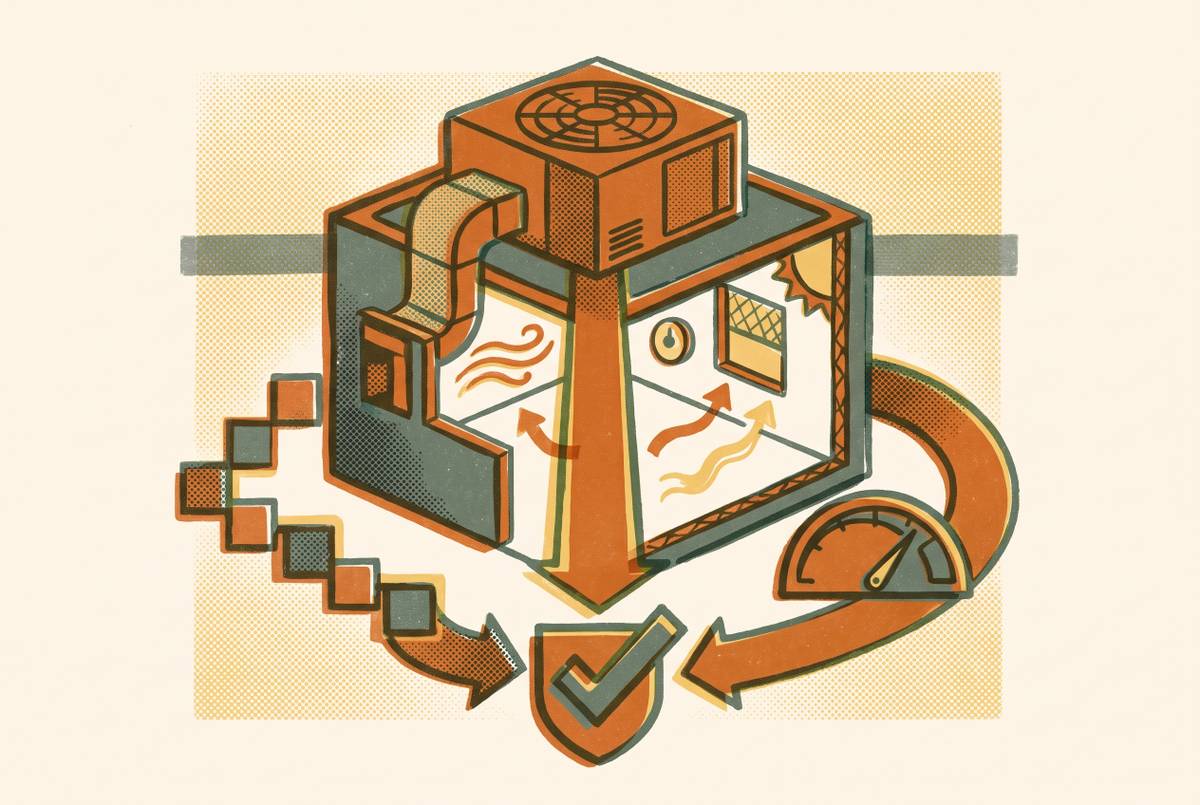
High-humidity HVAC design depends on separating latent load from sensible load. The two loads change independently across climates and operating conditions. Equipment selection and controls must account for how that ratio changes, especially at part load, when temperature demand falls but the air still needs moisture removal.
Why temperature and humidity are separate engineering problems, not one
A room can reach its temperature setpoint and still feel uncomfortable because its relative humidity remains high. The thermostat has registered success on only one measure. Sensible heat changes air temperature, while latent heat is associated with water changing phase without a change in dry-bulb temperature. A standard thermostat detects the first and cannot detect the second.
During condensation, water vapor releases latent energy into the refrigerant circuit, so moisture removal consumes electrical work even when the room temperature stays unchanged. That work belongs in the cooling calculation. Total cooling load is the sum of sensible and latent loads, and the Sensible Heat Ratio, or SHR, is sensible load divided by total load. A lower SHR means moisture removal accounts for a larger share of the required cooling. Equipment must meet both that balance and the combined load.
How the SHR shifts across climates and why the humid-climate ratio is the harder engineering constraint
Phoenix and Miami show how places with similar dry-bulb conditions can need different equipment. At a desert design point, incoming air contains much less moisture than at Miami’s design wet-bulb condition. Temperature alone does not describe that difference. The humid-climate system must remove a larger moisture load from outdoor air, so its required latent capacity rises relative to its sensible capacity. In that setting, latent performance can control equipment selection rather than remain a secondary check after tonnage has been chosen.
Office workers release both sensible and latent heat through respiration and perspiration, making conference rooms and assembly areas potential latent-load hotspots. Outdoor conditions need not be extreme for those spaces to require substantial dehumidification. Their occupancy can create a load balance unlike that of the surrounding building. A whole-building capacity figure can obscure this difference unless the calculation preserves the separate contributions of each space.
ASHRAE’s dehumidification design condition uses design dew point and mean coincident dry-bulb temperature to represent the moisture challenge. That is a different reference from peak sensible conditions. A selection based only on the hottest design day can therefore understate the required latent performance. The central constraint is not simply how much cooling the equipment provides, but how much of that cooling removes moisture under the relevant entering-air conditions.
The part-load asymmetry — why the humidity crisis peaks when the system is running least
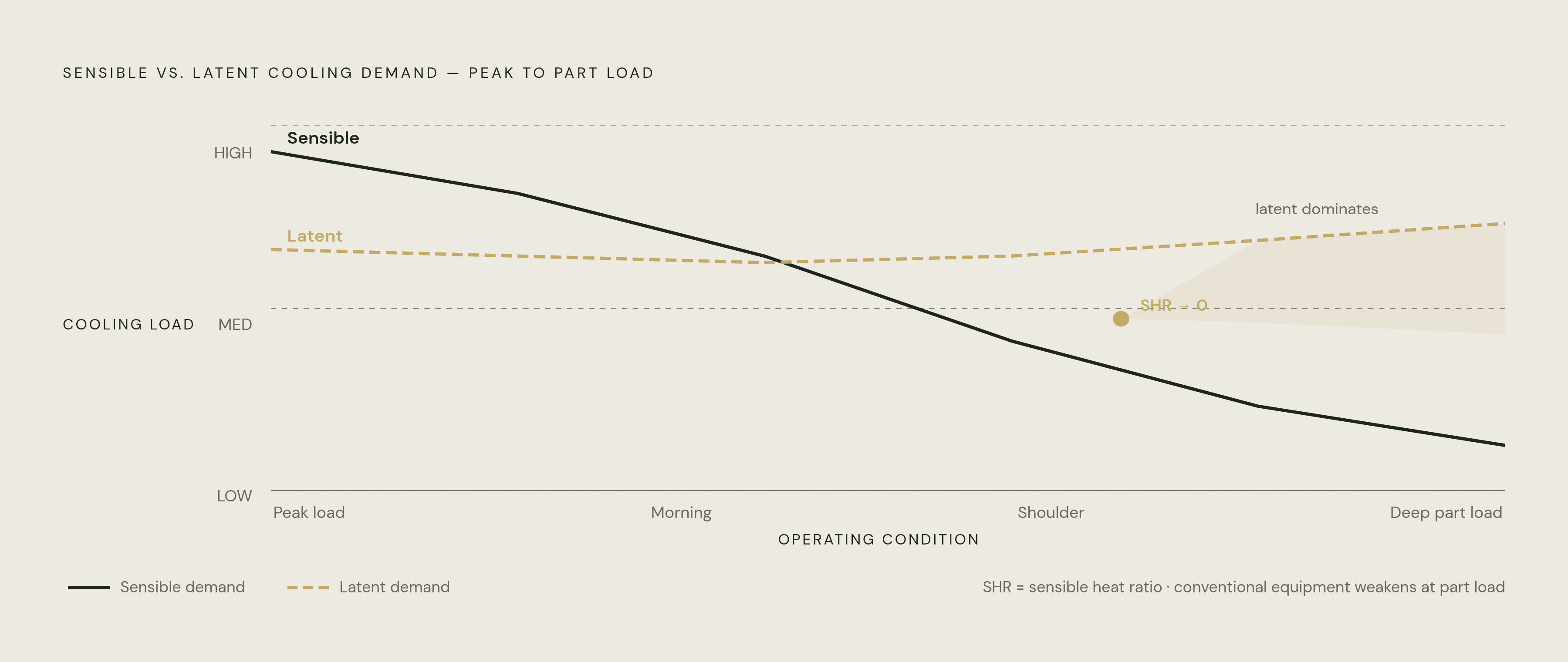
An early morning humidity spike exposes the weakness of temperature-led cooling control. As outdoor dry-bulb temperature falls, sensible demand drops, but outdoor dew point can stay high. The moisture load does not fall in step. At the most extreme balance, SHR can approach zero because nearly all the required cooling is latent. Yet the thermostat is asking for little cooling, precisely when the building still needs moisture removal.
This mismatch extends beyond the morning hours into shoulder seasons and other part-load conditions. These conditions represent the majority of annual operating hours. Many hot-humid buildings consequently require a higher ratio of latent to sensible cooling for much of the year than they do at peak design. But conventional mixed-air air-handling units are designed to meet peak sensible demand. As compressor capacity modulates down, coil surface temperature rises and condensation slows, weakening latent performance when the required latent fraction is increasing.
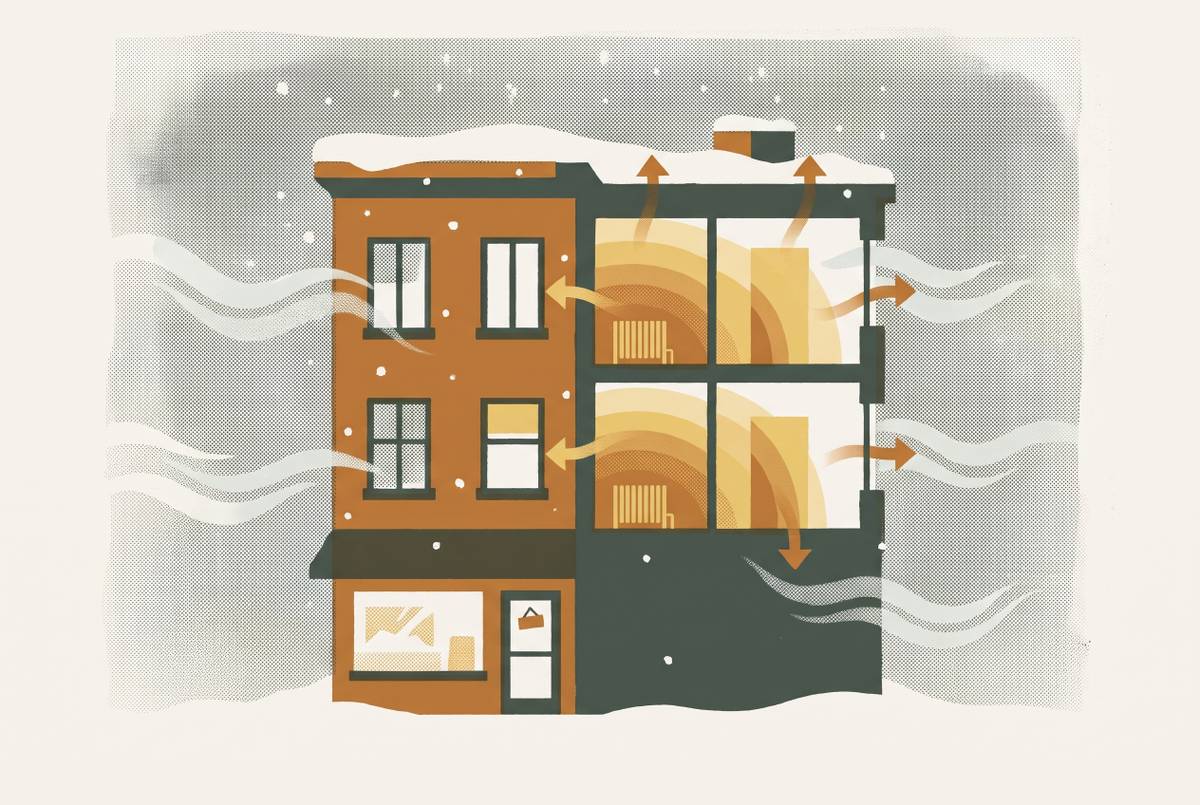
Better insulation, low-e glazing, and tighter construction reduce sensible gains, but latent demand does not necessarily decline proportionally. The resulting SHR moves lower. As energy codes call for better envelope performance, equipment chosen for an older balance of sensible and latent demand becomes a poorer match for the building. The physics are well understood, but peak-load sizing alone does not show how they affect operation over the year.
Why oversizing a system in a humid climate makes the humidity problem worse, not better
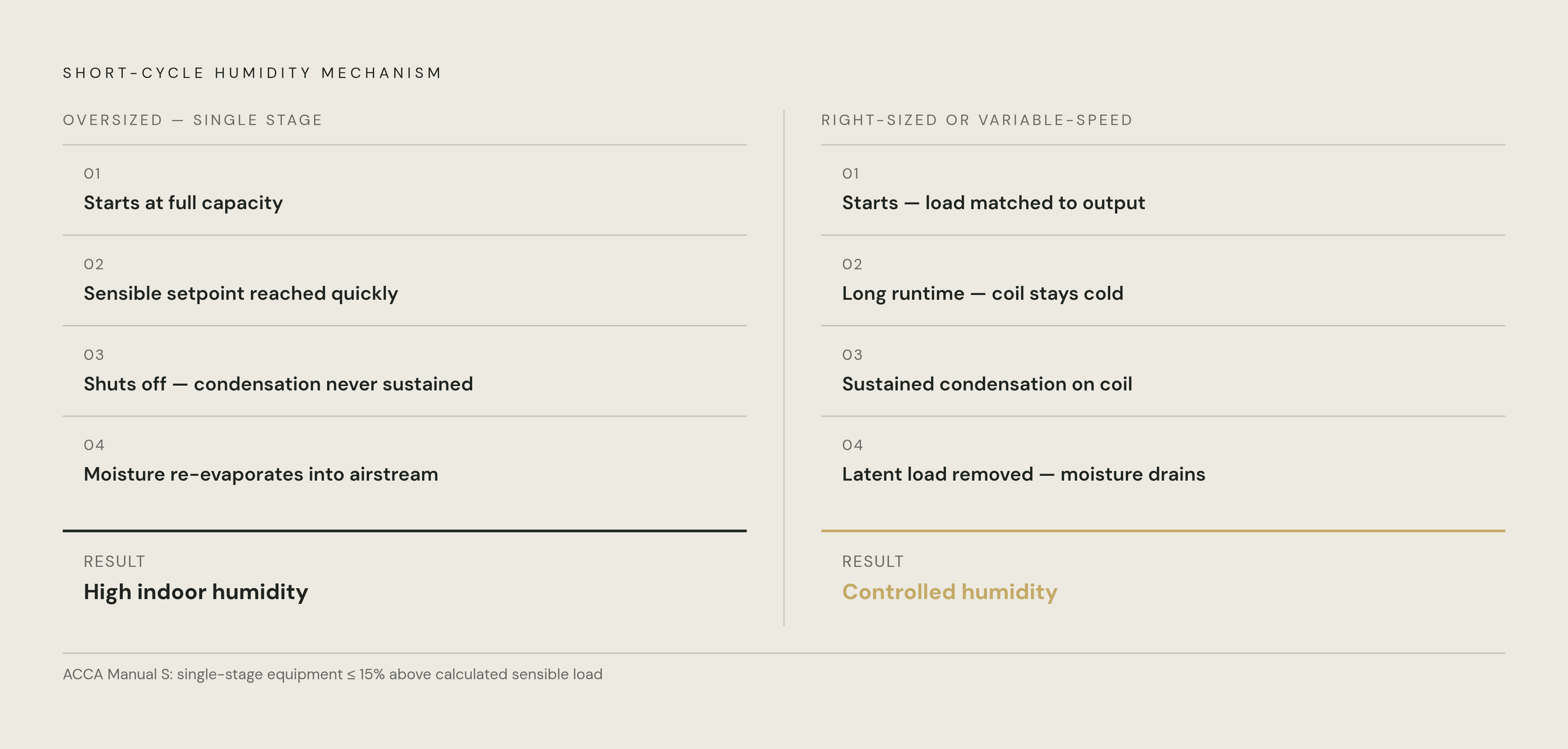
Adding capacity appears reasonable when occupants report discomfort, but it can aggravate a humidity problem. An oversized unit reaches the sensible setpoint quickly and shuts down before sustained moisture removal occurs. For condensation to occur, the evaporator surface must stay below the return-air dew point while the system runs. Short cycling repeatedly interrupts that process, so additional nominal capacity does not translate into useful latent performance.
Building Science Corporation’s analysis shows that latent removal makes up a much smaller share of total cooling in oversized systems under part-load conditions. Moisture already condensed on the coil can re-evaporate into the airstream after shutdown, while parasitic fan operation and poor staging add energy waste. These effects explain why more tonnage can produce worse comfort. The contractor’s capacity-based response addresses the temperature load while shortening the operating time needed to address moisture.
ACCA Manual S limits single-stage equipment to no more than 15% above the calculated sensible load to protect latent performance. Longer runtimes support more sustained moisture removal. Variable-speed blowers can also slow airflow to increase coil contact time, allowing more condensation during operation. These mechanisms work in the opposite direction from oversized single-stage equipment.
What ASHRAE 90.1 requires engineers to account for — and where it draws the climate-zone line
ASHRAE Standard 90.1 requires occupied-space relative humidity to remain at 65% or less when analyzed at the dehumidification design condition. That analysis uses design dew point with mean coincident dry-bulb temperature and sets space solar loads to zero. It is separate from the peak sensible calculation. Removing solar load from the analysis exposes the condition in which moisture demand persists without a corresponding temperature load.
Section 6.5.2.3 also constrains the means of dehumidification. The standard requires humidity controls to prevent reheating, mixing hot and cold airstreams, or other simultaneous heating and cooling of the same airstream where prohibited. Simple reheat is therefore not an unrestricted solution. Controls and equipment must meet the humidity requirement under the efficiency rules that apply, which limit when heat can be added to offset excess cooling.
In Climate Zones 0A, 1A, 2A, and 3A, supply air temperature reset must remain unimpeded by dehumidification controls. In practice, this points toward a separate outdoor air cooling coil, a dedicated outdoor air system, or an equivalent arrangement. In other climate zones, humidity controls can adjust supply air temperature. The boundary gives the independent variation of sensible and latent loads a direct consequence for both system architecture and equipment capacity.
Decoupling latent and sensible loads — how Dedicated Outdoor Air Systems separate the two problems at the design level
A Dedicated Outdoor Air System assigns ventilation treatment and space temperature control to separate systems. The dedicated unit conditions outdoor ventilation air before it enters occupied spaces, and a parallel system takes care of the sensible load that is left. Each loop has a distinct task. Because outdoor ventilation air is the primary latent-load source in most humid-climate buildings, treating it at entry removes much of the moisture burden before it reaches the space. With this setup, dehumidification does not rely entirely on the space thermostat calling for cooling.
A DOAS with the right design can handle all of the space latent load, including internal moisture gains, and typically zero to roughly thirty percent of the space sensible load. The parallel system handles the balance. With less load to handle, it can use smaller compressors, less ductwork, and less fan energy than a conventional combined arrangement. Separating ventilation from recirculated airflow also enables demand-controlled ventilation based on real-time occupancy. When spaces are partially occupied, the outdoor air unit can reduce ventilation and the associated latent load introduction.
First cost and system complexity remain legitimate objections, particularly in Climate Zones 3A and 4A, where latent loads are significant but less dominant than in hotter humid zones. The economic case depends on the climate. Payback is fastest where outdoor dew points remain high for most of the year, while the code requirements in Zones 0A through 2A effectively constrain the choice to arrangements that separate these functions. DOAS is therefore an architectural response to the load balance, rather than simply another category of cooling equipment.
Desiccant wheels and energy recovery ventilators as complements to refrigerant-based dehumidification
Desiccant wheels address the part-load gap through a moisture-removal mechanism that does not require refrigerant condensation. Hygroscopic material adsorbs moisture from incoming air and transfers it to an exhaust stream. The air need not be chilled below its dew point. Moisture removal can keep going whether the refrigerant system is running or not, helping with the morning and shoulder-season conditions that conventional cooling struggles to handle. In humid-climate DOAS installations, desiccant wheels are increasingly used as a first treatment stage before refrigerant cooling.
Energy Recovery Ventilators address a different part of the problem by reducing the load that reaches the primary cooling equipment. In hot-humid conditions, cooler, drier exhaust air pre-cools and partially dehumidifies incoming outdoor air. Both load components are reduced before the main coil. This can lower the required cooling capacity and runtime, rather than merely change how the main equipment responds to moisture demand.
An ERV transfers moisture as well as heat, unlike a Heat Recovery Ventilator, which recovers sensible heat only. That distinction is decisive in humid climates. An HRV can admit outdoor moisture without addressing its latent load, whereas an ERV reduces both incoming load components. Outside desert and high-altitude climates, the yearly demand for ventilation dehumidification is many times the sensible cooling demand for that same air. That balance supports evaluating outdoor-air pretreatment over the life of the system, rather than judging it only by its effect on peak sensible capacity.
Applying load separation in practice — what changes at the calculation, sizing, and controls level
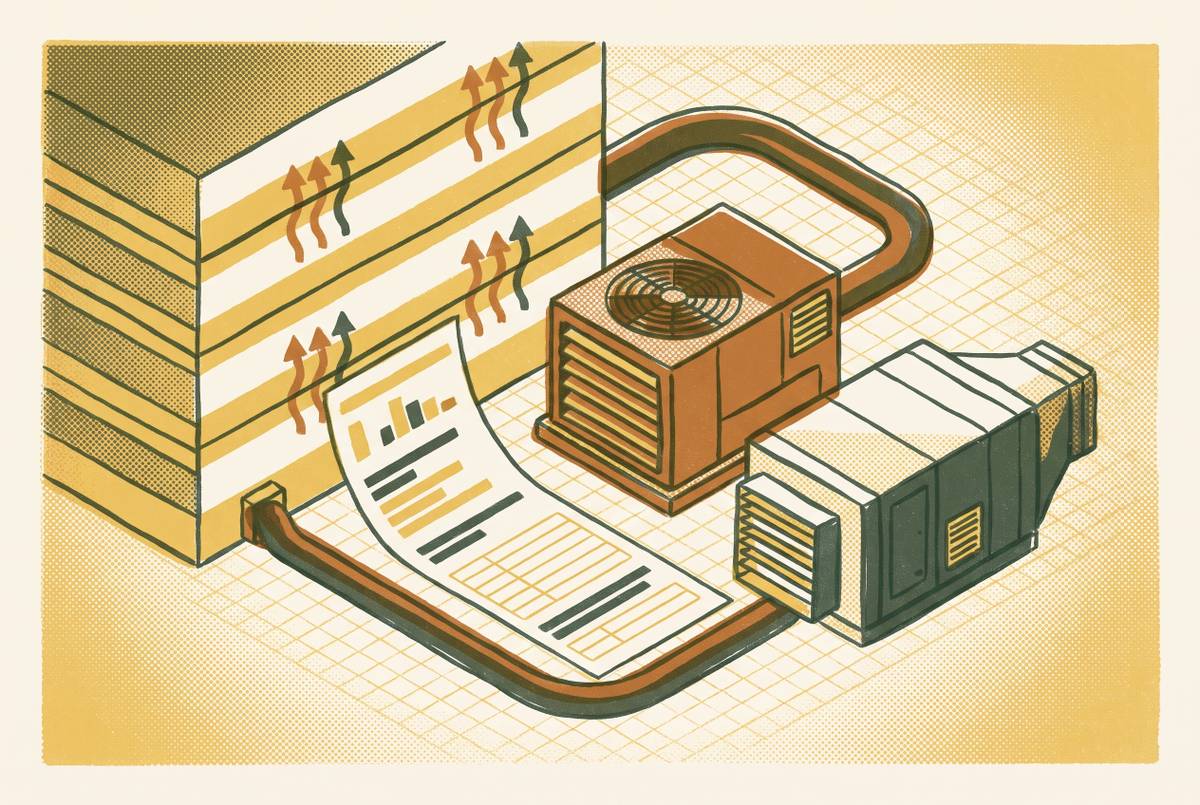
ACCA Manual J establishes separate sensible and latent calculations, and Manual S then matches those loads to equipment performance. The sequence works only if both outputs remain visible through selection. For practitioners, this means entering infiltration and ventilation at design humidity rather than averaged summer conditions, using design dew point to represent moisture demand. Outdoor moisture in grains per pound of dry air tells more about the air than dry-bulb temperature alone can. Occupancy latent loads must also reflect space type and density, so a crowded conference room is not diluted into a building-wide average.
Equipment must then be chosen using manufacturer performance data at actual entering-air conditions as well as AHRI standard rating conditions. Equal nominal tonnage does not imply equal SHR. Two units with identical rated total capacity can deliver different sensible and latent outputs at the project’s design temperature and humidity. Both outputs need to match the calculated requirements, with part-load conditions considered as well as peak demand. Where deployed, AI-assisted load calculation tools can reduce manual iteration by running separate analyses across multiple conditions and space types, but the selection criteria remain the same.
Controls complete the design and require their own explicit load separation. Thermostatic control alone cannot keep relative humidity at an acceptable level when latent demand stays high and sensible demand is low. Dedicated humidity sensors and independent dehumidification logic are required, with sequences that respect the standard’s restrictions on simultaneous heating and cooling. In a DOAS arrangement, the outdoor air and parallel sensible systems must also be coordinated so that ventilation does not introduce an untreated latent load while space cooling is at part load. The final test is whether moisture removal remains available when temperature control no longer calls for cooling.